
Standing Steady: The Other Side of the Journey
The Maldives is often experienced at its calmest.
Crystal-clear lagoons, gentle sea breezes, and seamless arrivals to island destinations create the impression of effortless travel. Yet beyond the passenger experience lies an operational environment shaped by movement, unpredictability, and ever-changing conditions.
For seaplane cabin crew, the ocean is not simply a view from the window. It is part of the workplace.
Every arrival and departure takes place on water. Sea conditions shift throughout the day, weather can change within moments, and aircraft move with the rhythm of the ocean. In an environment that rarely stands still, cabin crew are expected to remain steady.
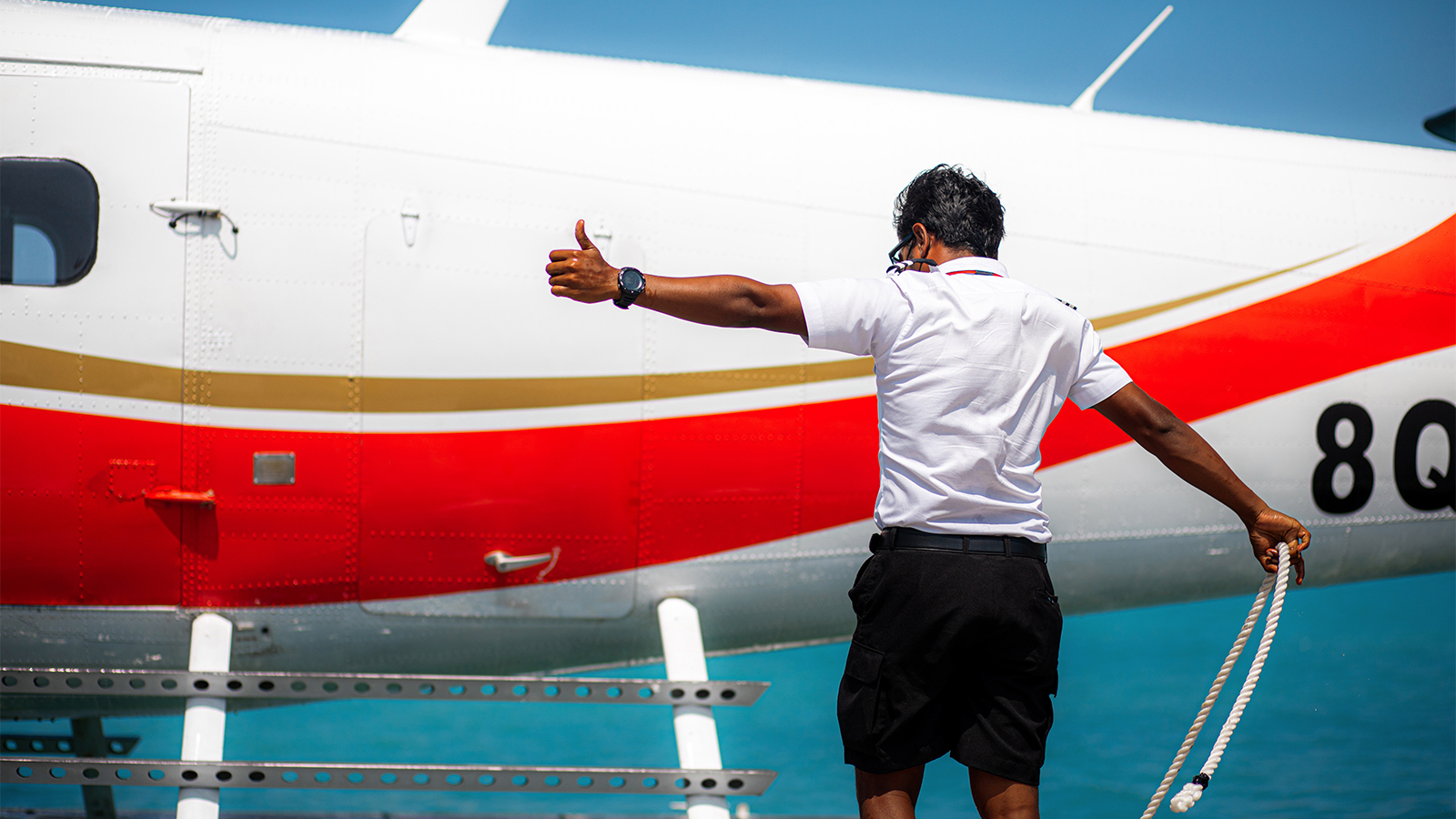
Their role extends far beyond welcoming passengers on board and ensuring their comfort throughout the flight. Among the first to step out upon arrival and the last to board before departure, cabin crew play an active role in supporting the transition between aircraft and dock. From coordinating passenger movement and assisting with baggage to helping secure the aircraft and preparing the cabin for its next journey, their responsibilities continue long after the aircraft touches the water.
It is a role unlike most in aviation.
Operating between sea and sky demands a unique combination of attentiveness, adaptability, and resilience. Cabin crew must remain aware not only of their passengers, but also of the operational environment around them. Working in close proximity to moving aircraft, changing sea conditions, and active docking procedures requires constant vigilance and a commitment to safety at every stage of the journey.
When conditions become more challenging, so too does the role.
Strong winds, rough seas, and adverse weather can influence everything from docking procedures to passenger movement and daily operations. Yet regardless of the conditions, the expectation remains unchanged. Every task must be carried out with the same professionalism, confidence, and attention to detail.
The role is also more physically demanding than many realise. Assisting with baggage, preparing cabins between flights, supporting arrivals and departures, and coordinating passengers throughout the journey all form part of a routine that requires both endurance and adaptability.
As one cabin crew member puts it, “The weather isn’t always steady, the ocean isn’t always steady, but we have to be. That’s part of the job.”
And perhaps that is what defines the role more than anything else.
Not because the environment is steady, but because they are.
While winds shift, seas change, and operations continue around them, cabin crew remain the constant. Their presence brings order to movement, reassurance to passengers, and continuity to an operation shaped by changing conditions.
It is a responsibility carried out every day, often without fanfare and frequently beyond the view of those they serve.
Yet behind every smooth arrival, every safe departure, and every memorable seaplane journey is a team of professionals whose work extends far beyond the cabin.
In an industry built on movement, they have mastered the art of remaining steady.
And that may be one of the most remarkable parts of the journey.