Leading the Way: The Maldivian Captains Shaping TMA’s Flight Operations Legacy
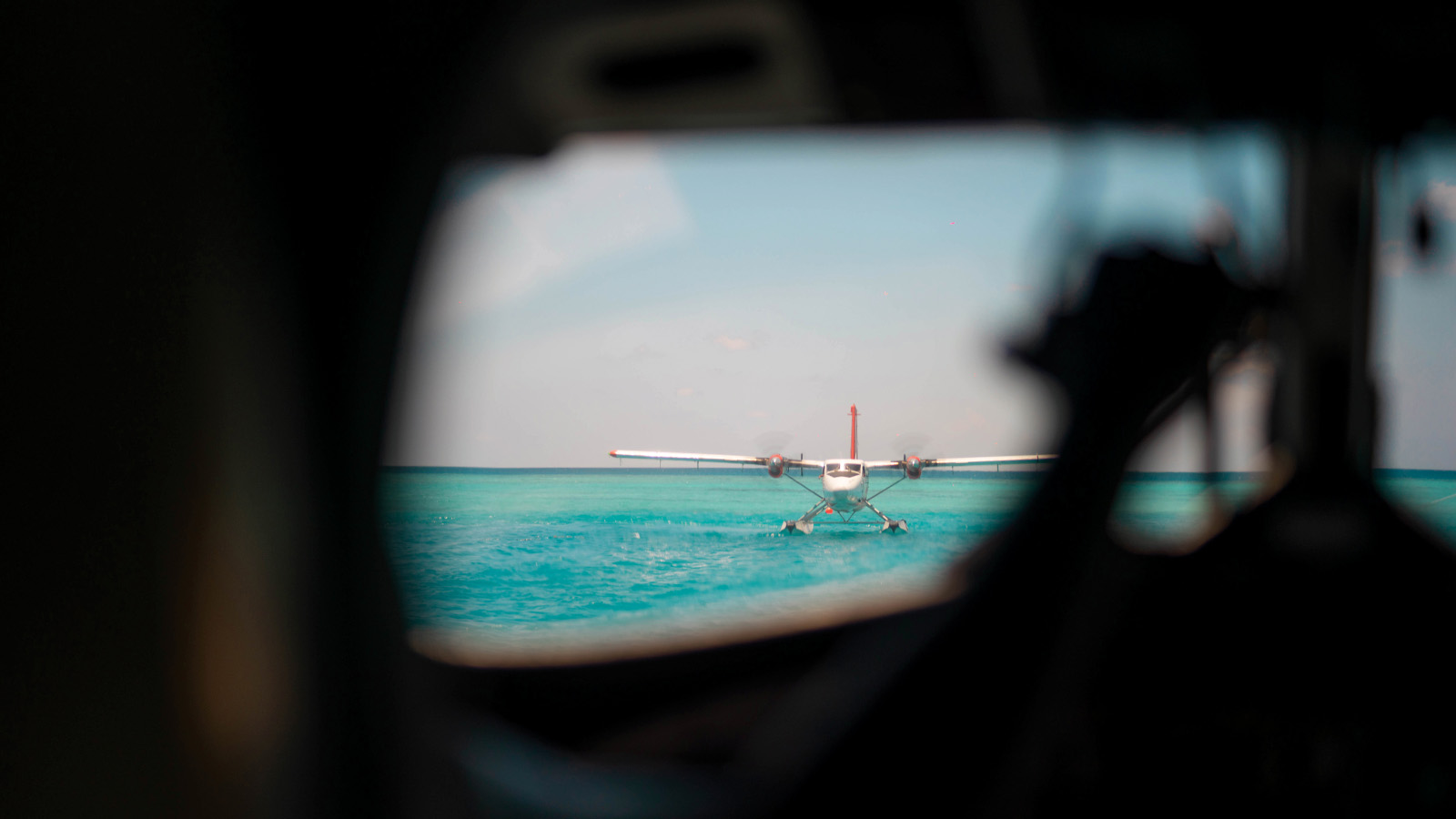
As the sun kisses the horizon each morning, the lagoons take on their silvery calm, and the islands stretch awake beneath the first light of the day. With it a familiar rhythm stirs: the pulse of the world’s largest seaplane fleet comes alive, connecting islands, resorts and communities across the archipelago.
Trans Maldivian Airways operates more than 400 seaplane flights daily, making it the world’s largest seaplane operation. At the helm of this vast and complex network are the captains who guide it – steady, skilled, and entrusted with navigating one of the most demanding flying environments in the world.
Yet this chapter of excellence was hard-won. Long before TMA’s red seaplanes became synonymous with the Maldivian turquoise, its cockpits & hangars were guided by expatriates who brought in the expertise needed to launch a pioneering and ambitious seaplane service. In those early years, Maldivian crew entered the flight deck gradually- observing, assisting and learning – first as cabin crew, later as co-pilots and eventually, captains.
What started as an operational necessity soon evolved into a deliberate and transformative journey. Mentorship turned into mastery; training evolved into leadership. Over time, a generation of Maldivian pilots rose through the ranks and stepped confidently into roles once held exclusively by their expatriate teachers who inspired them. These aviators have refined a demanding craft that now bears an unmistakable, proudly Maldivian imprint.
Their expertise is uniquely attuned to the Maldives. Forged by the realities of navigating coral atolls, reading the subtle tyranny of the nakaiy, interpreting the delicate, ever-changing dance of wind, tide and ocean currents. These pilots possess a depth of innate local intuition that no flight theories or training manuals can truly convey — it is a wisdom earned only through years of lived experience spanning the Maldivian seas and skies. Today, they stand amongst some of the world’s most seasoned Twin Otter & seaplane pilots.
Among them stand four leaders who shape the pace, safety, and the very soul of TMA’s Flight Operations. Individually, their careers span decades of dedication; collectively, they are the evolution of Maldivian aviation personified. They form the backbone of an aviation story unlike any other – guiding the world’s largest seaplane operation with experience forged locally, and standards recognized globally.
Captain Ismail Shifan – Chief Pilot
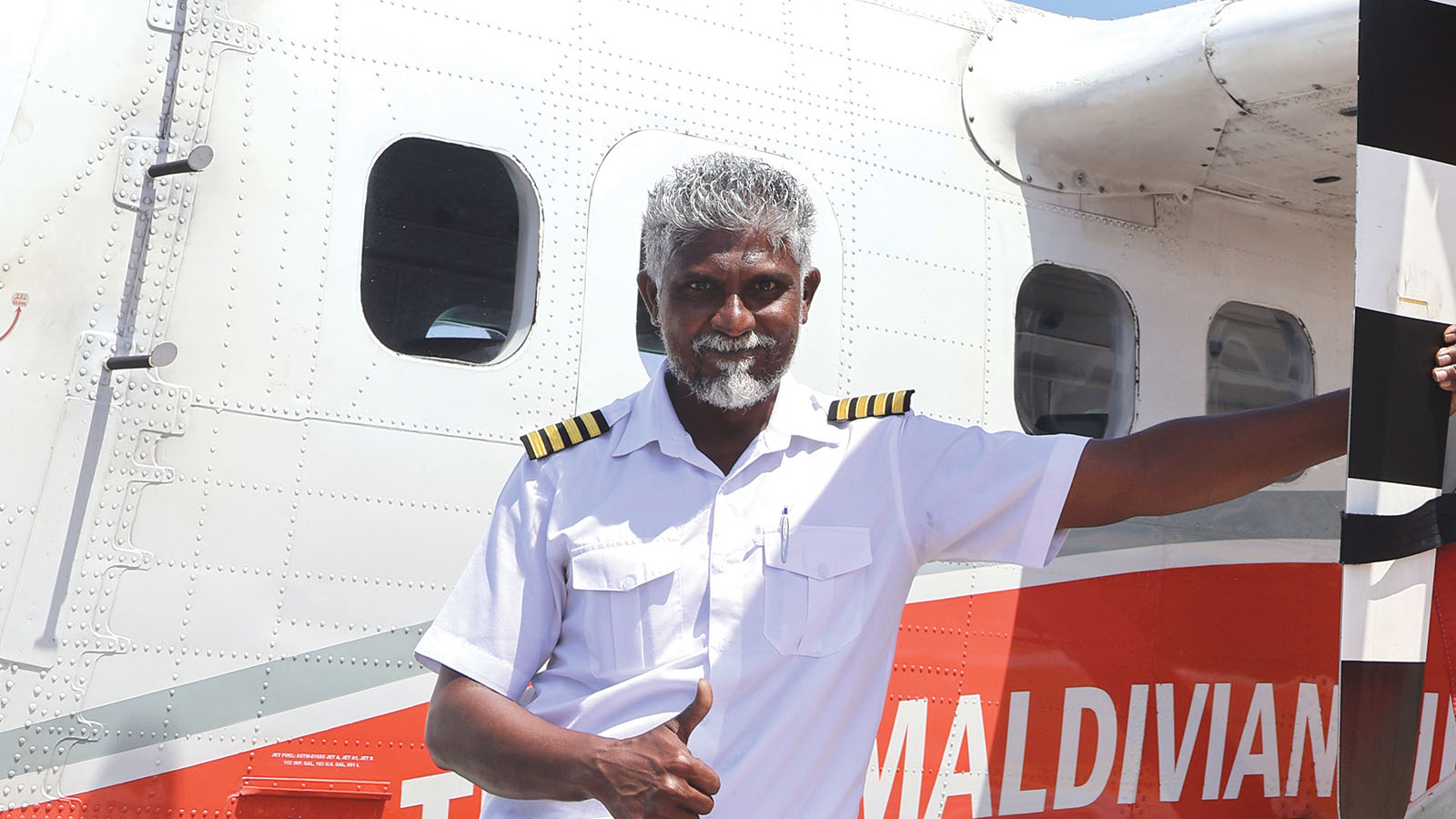
“Seaplane flying is shaped by the sea — and by discipline.”
Captain Shifan stands among the few leaders whose careers are inseparable from the evolution of Maldivian seaplane aviation itself. From the industry’s earliest operational foundations to its present-day standing as the world’s largest seaplane operation, his journey reflects not only growth, but responsibility assumed early, carried steadily, and upheld without compromise.
He entered aviation at just 18, joining Hummingbird Helicopters as a cabin crew at a time when pathways to the cockpit were limited and uncertain. Remaining close to flight operations was a deliberate choice. It allowed him to observe the discipline, judgement, and accountability demanded by aviation long before he would carry that responsibility himself.
That responsibility was familiar long before aviation became his profession. Growing up surrounded by the sea, Captain Shifan learned to read wind, currents, and weather instinctively. Fishing, swimming, and navigating Maldivian waters shaped a situational awareness that would later become critical in seaplane operations, where every takeoff and landing is governed by environment rather than infrastructure.
With pilot training opportunities scarce, he made a pragmatic decision to step outside aviation to secure a future within it. Joining the Bank of Maldives, he worked across multiple departments, gaining first-hand exposure to structure, governance, and accountability. The experience strengthened his understanding of systems and decision-making, lessons that would later influence his leadership approach. True to his word, once his commitment was fulfilled, he left to pursue pilot training overseas.
Training in Canada introduced him to an uncompromising environment. Extreme weather, structured programmes, and high expectations reinforced discipline and independent judgement. It was not simply about learning to fly, but about learning to think decisively, responsibly, and consistently.
On returning to the Maldives, Captain Shifan joined Trans Maldivian Airways, which had emerged from Hummingbird’s foundations and was beginning to define itself at scale.
Having witnessed the operation from its earliest days, he understood both its limitations and its potential. He progressed from First Officer to Captain with a deep appreciation for the operational realities of seaplane flying in one of the most complex environments in global aviation.
A defining influence throughout this progression was Fahud, Head of Flight Operations. Under his mentorship, Captain Shifan underwent type training during a period when both mentor and pilot were shaping their roles. Fahud’s leadership, grounded in patience, clarity, and quiet authority, left a lasting mark. Errors were addressed as learning moments, reinforcing accountability without eroding confidence. That approach continues to inform Captain Shifan’s own leadership philosophy today.
Promoted to Captain in 2009, Captain Shifan later transitioned into senior leadership as the operation expanded rapidly. Today, as Chief Pilot, he carries responsibility for operational standards, safety oversight, pilot development, and decision-making across a non-scheduled, high-tempo network operating over vast maritime terrain.
The role demands constant judgement. Commercial pressure is inevitable, but safety remains absolute. As Chief Pilot, he approaches every decision from the same position: pilot first. Whether assessing weather limitations, operational feasibility, or crew readiness, his focus remains unwavering. Operations must be safe, disciplined, and defensible.
Equally central to his role is people. Captain Shifan places strong emphasis on pilot development, mentorship, and open communication. Having flown the line for decades, he understands the pressures pilots face. Confidence, clarity, and trust are treated not as soft values, but as operational necessities. In his view, a supported pilot is a safer pilot.
Perhaps the most significant transformation he has overseen is the shift from foreign-led cockpits to a predominantly Maldivian command. Today, the majority of TMA’s pilots are locally trained and internally upgraded. This transition reflects not only organisational maturity, but national capability. By developing talent from within, the airline has built consistency, loyalty, and long-term operational resilience.
Operationally, TMA has evolved from experience-led flying to a system-driven organisation defined by standardisation, formal training pipelines, safety management systems, and data-informed decision-making.
For Captain Shifan, capturing experience and translating it into structure is essential — ensuring that lessons learned are preserved, shared, and applied consistently.
Despite the scale of today’s operation, his connection to the fundamentals of seaplane flying remains unchanged. His early life at sea continues to inform his judgement, allowing him to assess conditions beyond charts and forecasts. It is a reminder that even in the most advanced operation, aviation remains a discipline of awareness and respect.
Captain Ismail Shifan’s legacy is not measured in titles or flight hours alone. It is reflected in the standards upheld, the pilots shaped, and the safety culture enforced across an operation that carries thousands of passengers safely across Maldivian waters every day. Having witnessed Trans Maldivian Airways rise from its earliest foundations to global recognition, he now stands as one of its principal custodians, ensuring that growth never outpaces responsibility.
Captain Hassan Rajesh – Deputy Chief Pilot
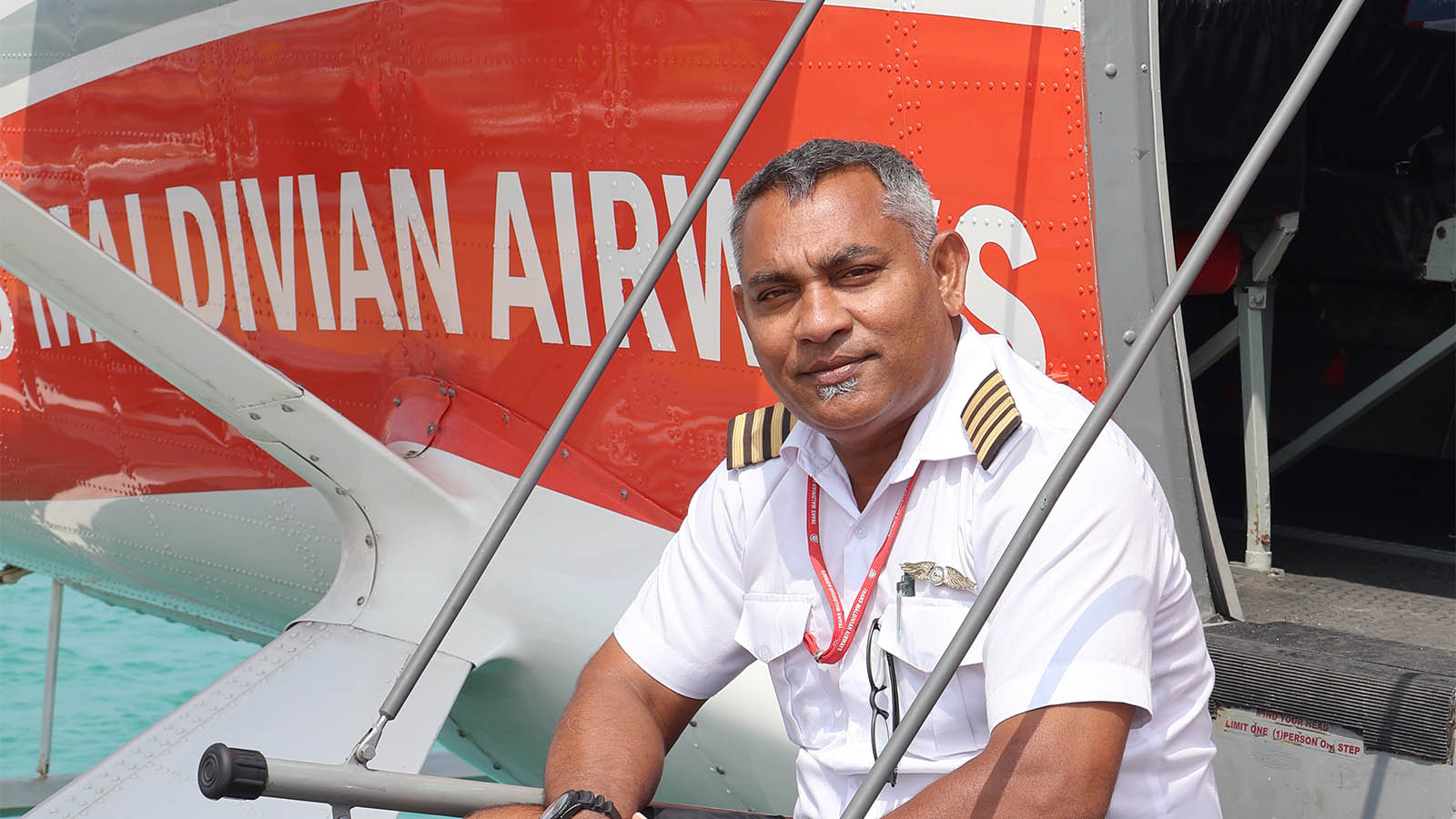
“A pilot’s responsibility doesn’t end in the cockpit — we represent our airline, our country, and the way we welcome the world to the Maldives.”
Captain Hassan Rajesh joined Hummingbird Island Helicopters in 1997, at a time when seaplane aviation in the Maldives was still establishing its operational foundations. At just 19 years old, he entered the company as a cabin crew, beginning his career without any defined ambition to become a pilot. Aviation was not an early goal. Becoming a pilot felt unlikely, shaped by the perception that flying was reserved for those with strong academic backgrounds. That perception began to change through proximity. Working closely with flight operations and observing cockpit decision-making and the responsibility carried up front gradually reframed what he believed was possible.
After returning to the operation in 2000, that interest became intent. Pilot training became the objective, and funding was the barrier. The opportunity came through mentorship, when a senior captain recognised his punctuality, reliability, and professional conduct on the line, and chose to support his pilot training in Canada.
Captain Rajesh returned as a pilot during a period when flight crew were directly involved in many aspects of daily operations. Pilots and cabin crew travelled by vessel to place water markers, physically setting up landing areas and assessing conditions on site. Float operations and operational readiness depended heavily on the judgement of those flying the aircraft.
As the fleet expanded, responsibilities gradually shifted into dedicated departments, reflecting the organisation’s steady growth in scale and complexity. Training pathways evolved alongside these changes, and an operation built on individual effort matured into a fully structured system.
Now serving as Deputy Chief Pilot, Captain Rajesh continues to operate at the intersection of leadership and line flying. He remains operationally current, ensuring decisions are informed by day-to-day realities. Accessibility is deliberate. Issues are addressed directly, and expectations apply consistently, regardless of role or rank.
In the cockpit, his priorities are clear. Punctuality is fundamental in a high-tempo operation where individual reliability affects the wider network. Discipline, professional presentation, and sound judgement are operational requirements. Pilots are visible representatives of both the company and the country at every destination they serve.
Captain Rajesh believes the role of a pilot does not end at the cockpit. Anyone who arrives in the Maldives is, to him, a guest of the country, regardless of airline or affiliation. That understanding carries into how he moves through his day. On duty or not, if he notices someone unsure or in need of help, he steps in without hesitation — offering guidance, direction, or reassurance as instinct, not driven by title, authority, or recognition. Welcoming people, and treating them with care, is simply part of how he carries himself in uniform and out of it.
Captain Mohamed Khalid – Technical Operations Manager
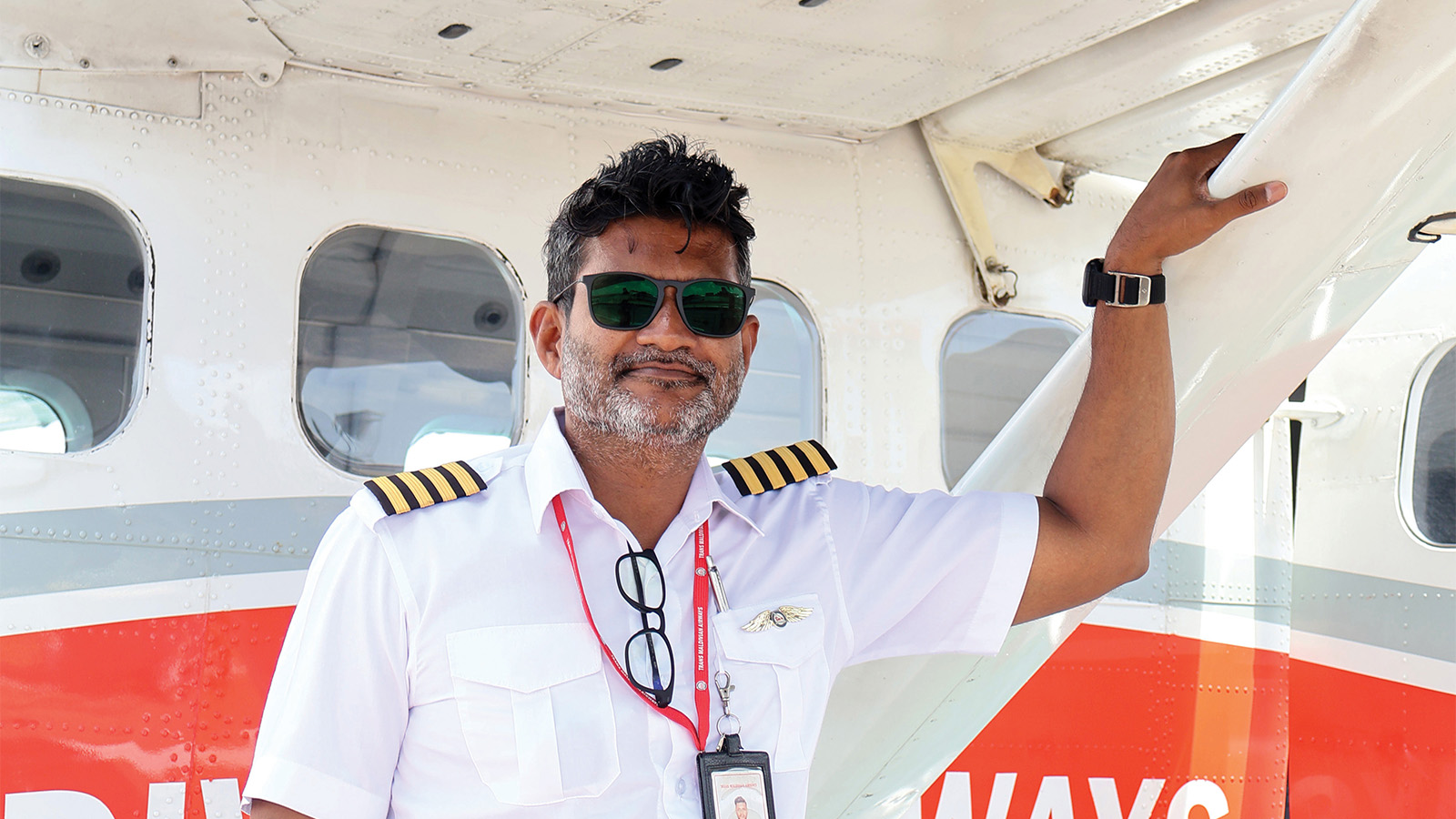
“For passengers, the journey feels effortless. Behind the scenes, it’s the result of countless decisions, systems, and experience working together to keep every flight safe.”
Captain Mohamed Khalid’s career reflects the quiet evolution of Maldivian aviation — one shaped not only in the cockpit, but through the systems, standards, and decisions that underpin safe flight operations every day.
His aviation journey began with pilot training in Sri Lanka, followed by advanced training in the United States, where he completed his multi-engine and seaplane ratings. Returning home, he launched his professional flying career in the Maldives on the DHC-6 Twin Otter, progressing from First Officer to Captain and later serving as a Designated Check Pilot. These formative years embedded a deep operational understanding of seaplane flying in one of the world’s most complex environments.
In 2011, Captain Khalid expanded his experience internationally, flying regional routes in Malaysia under IFR operations. Exposure to controlled airspace, structured procedures, and rigorous standardisation added a broader operational discipline that would later shape his approach to documentation, procedures, and compliance.
At the end of 2019, he returned to the Maldives and rejoined Trans Maldivian Airways. With an expanded operational perspective, he gradually transitioned into technical leadership, focusing on Standard Operating Procedures, operations manuals, and the practical alignment between regulatory frameworks and line operations. As Technical Operations Manager, Captain Khalid now bridges day-to-day flying with the technical and regulatory systems that sustain safe, large-scale seaplane operations.
His role spans assessing water aerodromes, evaluating seasonal and environmental risks, and supporting new resort developments to ensure year-round operational feasibility. He works closely with Air Traffic Control through airspace working groups, helping manage increasing traffic density and ensuring predictable, safe integration between seaplane operations and other airspace users.
Equally critical is his coordination with Engineering and Maintenance, ensuring that avionics upgrades, aircraft modifications, and cabin changes are operationally sound and accurately reflected in procedures before entering service. He has also played a key role in the digitalisation of flight operations, including the introduction of electronic QRHs and digitally generated flight plans — changes designed to enhance consistency, efficiency, and safety.
For Captain Khalid, the heart of technical operations lies in capturing experience and translating it into structure — ensuring that hard-earned operational knowledge is passed on clearly, consistently, and safely to the next generation of Maldivian pilots.
Captain Arif Mohamed Didi – Chief Flight Instructor
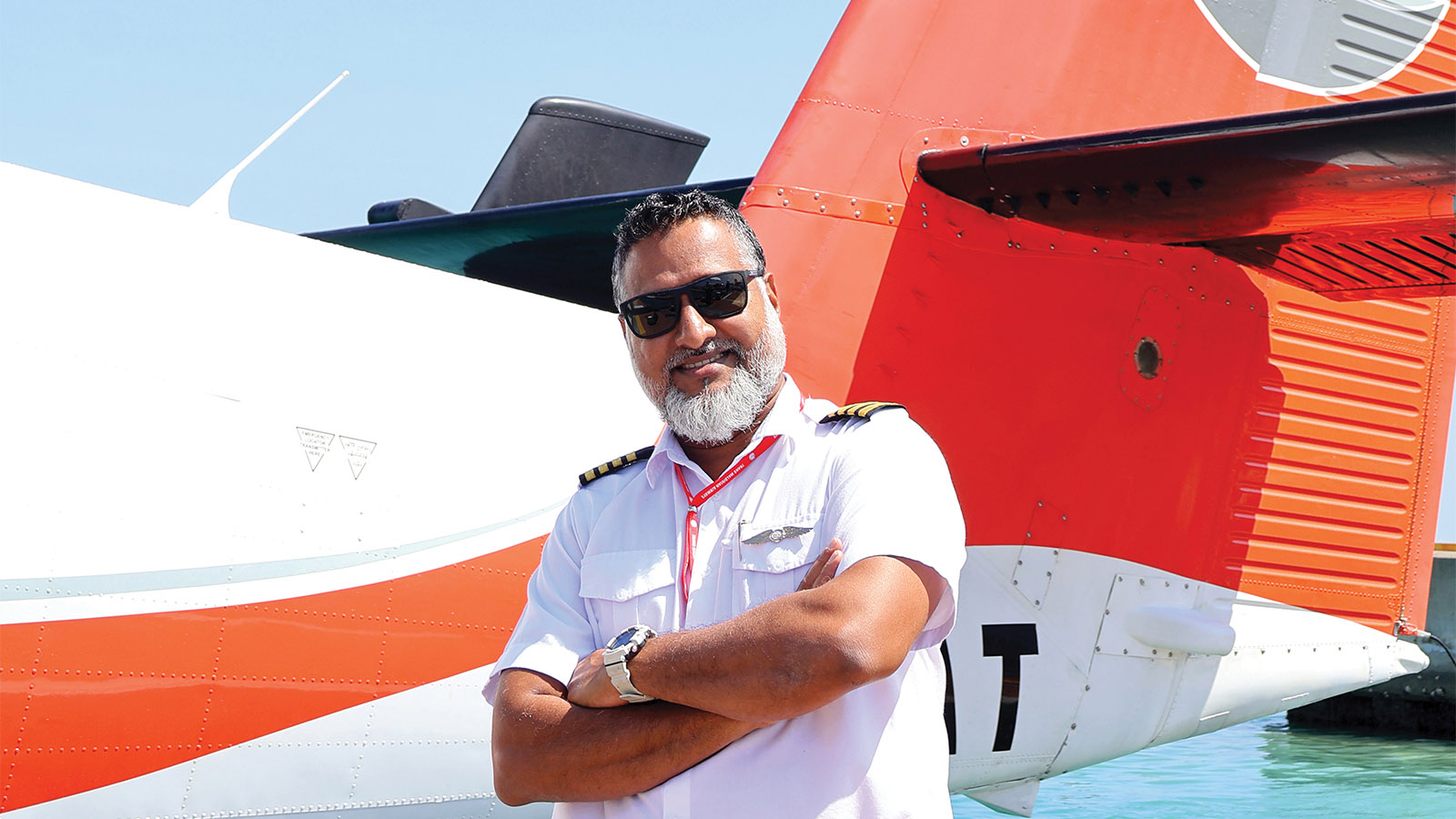
“Skill gets you into the cockpit — judgement, attitude, and mentorship define the pilot you become.”
Captain Arif Mohamed Didi’s contribution to Maldivian aviation is measured not only in flight hours, but in the generations of pilots shaped through structure, discipline, and mentorship.
Academically inclined from an early age, he initially considered a future in Civil Engineering. But the path was long and heavily academic, while aviation offered something different: a profession grounded in theory, yet shaped by practical skill, discipline, and judgement. That balance ultimately led him skyward.
His introduction to aviation came from his brother, who was a cabin crew at Maldivian Air Taxi, and at the time, this was deemed as one of the few viable pathways into the cockpit. After completing his pilot training, Captain Arif joined MAT as a cabin crew in 2006, determined to remain close to flight operations until an opportunity emerged. Eight months later, he transitioned to the right seat as a First Officer.
The journey was challenging. With very limited access to loans and scholarships, academic performance mattered, and a government pilot scholarship was the only viable path forward. Selected from a pool of nearly 400 applicants, he secured that scholarship — a decisive moment that made his aviation career possible.
Shortly after becoming a Captain, Captain Arif moved into training, joining the department in 2011 after completing 1,000 hours as PIC. Teaching had long been familiar territory. His father ran a tuition centre on their home island, and from a young age, Captain Arif was involved in guiding others — a foundation that naturally evolved into flight instruction.
As Chief Flight Instructor at Trans Maldivian Airways, he oversees the full practical training journey once pilots complete ground school. From dock and line training to recurrent checks, performance monitoring, and progression from First Officer to Captain — and eventually Examiner — every stage of hands-on development falls under his remit. His focus is consistency, quality, and readiness across a high-tempo operation.
Training, he notes, has evolved significantly over the years. Where early programmes were limited, today’s pilots undergo structured ground schools, CRM, SMS, MCC, and rigorous assessments before entering line training. Standards are higher — and so are expectations.
In an environment defined by changing “runways,” over 80 water aerodromes, and rapidly shifting conditions, Captain Arif looks beyond technical skill. Maturity, situational awareness, patience, and sound judgement are essential. To the next generation, his message is clear: be proactive, stay level-headed, and share responsibility — because aviation progresses only when experience is passed on.
Four Voices: One Mission
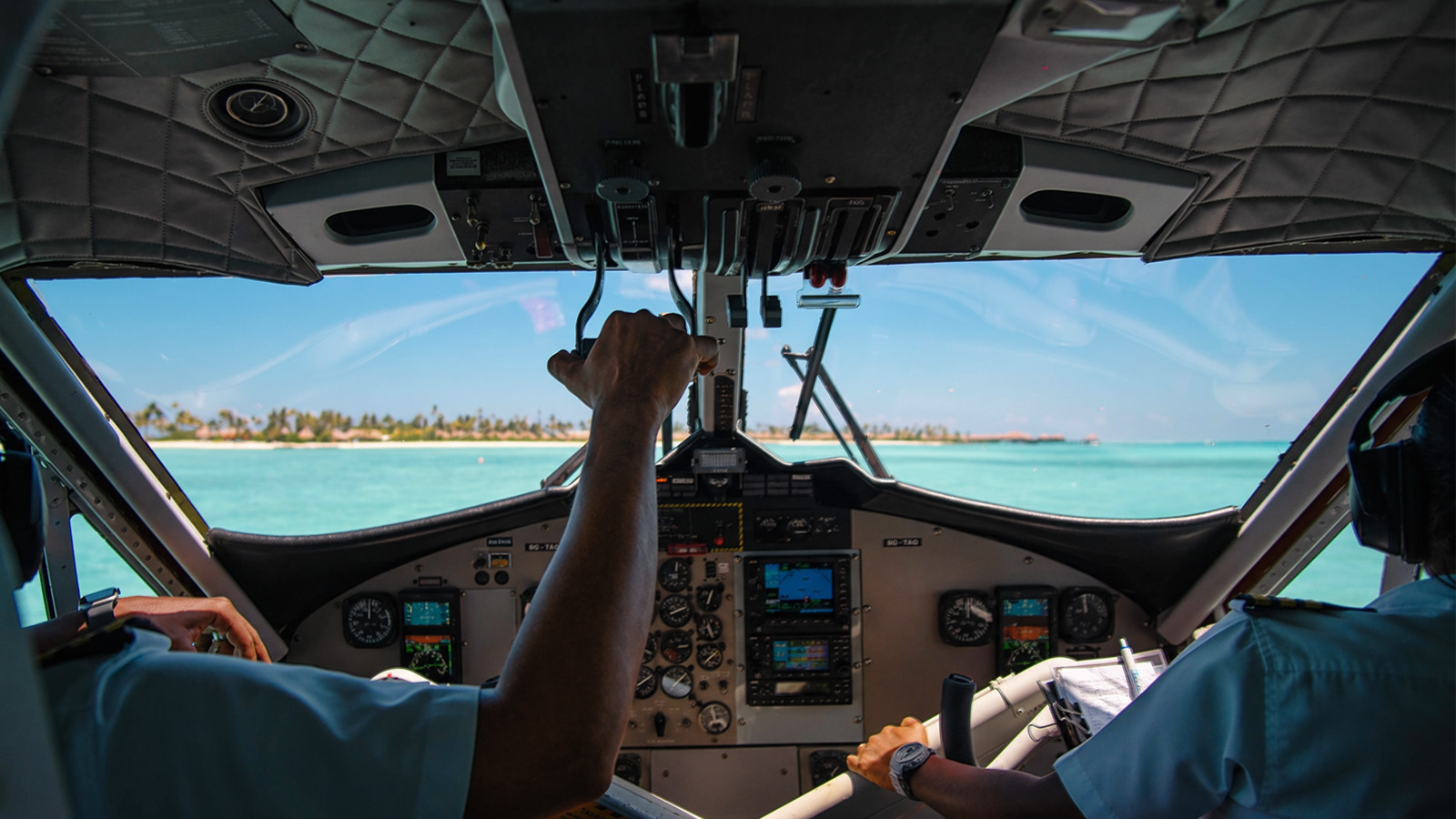
“Individually, their careers span decades of dedication; collectively, they are the evolution of Maldivian aviation personified.”
Across different roles and responsibilities, these captains are united by a singular commitment: to uphold the discipline, safety, and spirit that sustain TMA’s Flight Operations. Their journeys reflect a shared rhythm — the quiet focus of first light, the precision demanded by every water landing, and the responsibility of guiding the world’s largest seaplane operation day after day.
Individually distinct yet collectively aligned, their stories reveal the values that shape TMA’s cockpit culture today — and form a living record of experience, mentorship, and leadership passed from one generation of Maldivian pilots to the next.
As the Maldives continues to grow and welcome more travellers than ever, TMA’s captains remain the steady hands guiding its skies. Their leadership extends beyond daily operations, shaping the standards, mindset, and professionalism of the pilots who will follow.
From expatriate beginnings to a proudly Maldivian-led cockpit, the evolution of TMA’s Flight Operations stands as both an operational achievement and a cultural milestone. And as aircraft numbers expand, technologies evolve, and the cadence of hundreds of daily flights continues, one truth remains unchanged: the skies above the Maldives are carried forward by those who have grown with them.
This chapter captures four such voices — but the story itself is ongoing. With every flight, every lesson, and every horizon crossed, the next generation adds its own line to a legacy still being written.